
NEWS & INSIGHTS
Stay Informed. Keep Moving.
Related Posts
- ▶ First vs. Second Generation Wheel Hub Bearings: Installation Differences
- ▶ Second Generation Wheel Hub Bearings: Design and Mounting Explained
- ▶ Automotive AC Compressor Bearings: How Heat and Speed Affect Service Life
- ▶ First Generation Wheel Hub Bearings: Design and Installation Basics
- ▶ Why Do Wheel Hub Bearings Fail? Common Causes and Diagnostic Signs
- ▶ Selecting Tapered Roller Bearings for Combined Radial and Axial Loads
Send Us A Message
First Generation Wheel Hub Bearings: Design and Installation Basics
First Generation Wheel Hub Bearings are compact bearing units that support a vehicle’s wheel while accommodating radial and axial loads. Their relatively simple design makes them common in many automotive applications, but reliable performance depends on more than choosing a bearing that looks similar to the old one. Fit, mounting method, and installation procedure all matter. Understanding these basics can make replacement and sourcing decisions much less uncertain.
What Is a First-Generation Wheel Hub Bearing?
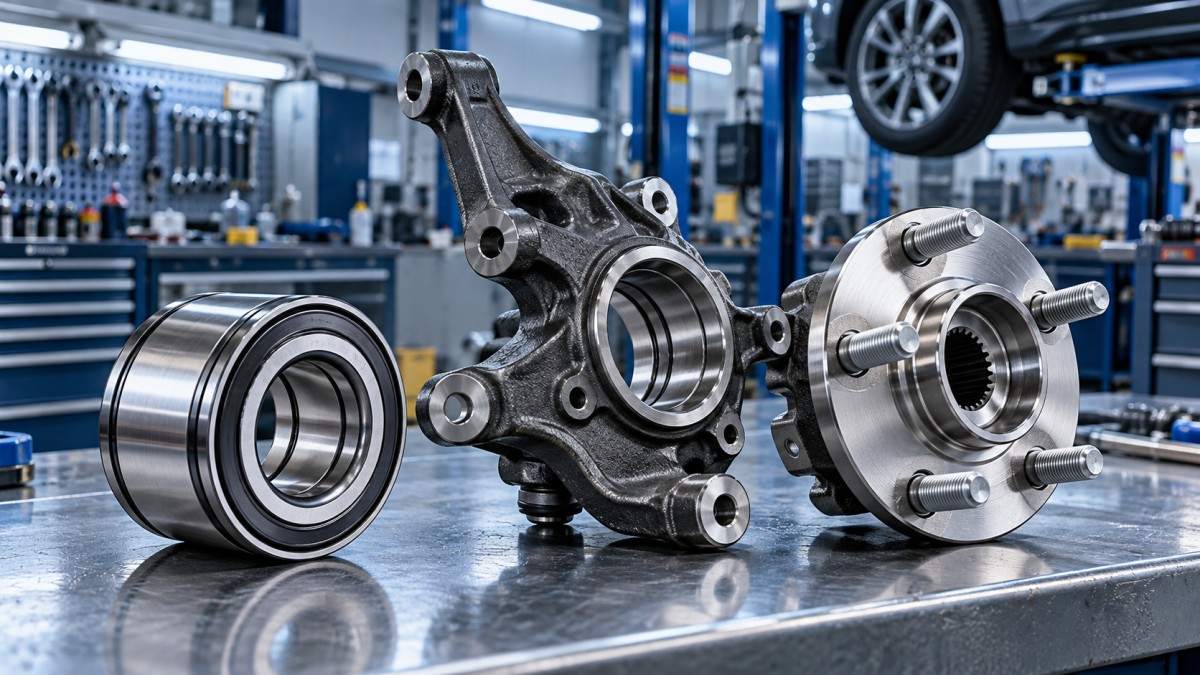
A first-generation wheel hub bearing is generally a sealed, double-row bearing supplied separately from the wheel hub and steering knuckle. It is commonly pressed into the knuckle, with the hub then pressed into the bearing. Depending on the application, the unit may use angular-contact ball bearings or tapered rollers.
The two rows of rolling elements are arranged to manage loads in more than one direction. Radial loads act roughly perpendicular to the axle, such as the vehicle’s weight on the wheel. Axial loads act along the axle and become especially important during cornering. The bearing allows the hub to rotate while keeping wheel movement controlled.
Most units are lubricated and sealed during manufacture. They are not normally intended to be dismantled or adjusted during installation. Seals help retain grease and limit contamination, but they do not eliminate the need for correct handling.
How Does It Differ From Later Hub Bearing Generations?
The main distinction is how much of the surrounding hub assembly is integrated into the bearing unit. A first-generation bearing typically requires separate hub and knuckle components and a press-fit installation. Later generations often incorporate a mounting flange, a hub, or both, depending on the design.
That difference affects replacement work as much as product selection. A press-in bearing may require more careful control of support and force during installation, while a flanged assembly may be mounted differently. “Newer generation” does not automatically mean interchangeable: the correct design is determined by the vehicle and its original assembly.
Installation: Where Good Bearings Can Go Wrong
A bearing can be damaged before the vehicle ever leaves the workshop. For example, pressing it into a housing through the inner ring can transmit force through the rolling elements. The result may be internal damage that is not obvious from the outside.
The guiding principle is to apply installation force to the ring being fitted:
- When pressing the bearing into the knuckle: support the knuckle correctly and apply force to the bearing’s outer ring.
- When pressing the hub into the bearing: support the inner ring as specified so the force does not pass through the rolling elements.
Use suitable press tools and follow the vehicle manufacturer’s procedure. Avoid striking the bearing directly, pressing on a seal, or using the rolling elements to transfer force. Do not assume that a bearing that turns freely after installation is necessarily undamaged.
Check the surrounding parts, too
Before pressing in the new unit, inspect the knuckle bore and hub shaft for scoring, corrosion, distortion, or wear. Clean the mating surfaces and check that retaining-ring grooves and related hardware are in serviceable condition. A damaged hub or housing can compromise the fit of an otherwise correct bearing.
Some applications use a magnetic encoder in one bearing seal for a wheel-speed sensor. If so, orientation matters: the encoder side must face the sensor according to the vehicle instructions. Handle that side carefully and keep it away from contamination or damage.
After assembly, use the specified fasteners and axle-nut tightening procedure. Torque values and any replacement requirements vary by vehicle; guessing can affect bearing retention and service life.
Choosing the Right Bearing for an Application
Dimensions are a starting point, not the whole answer. Two bearings with similar outside measurements may differ in internal design, seals, load capacity, or sensor compatibility. When researching a replacement, gather the vehicle and axle details, the original part number where available, and any bearing identification marks.
It is also worth checking whether the application calls for a ball-bearing or tapered-roller design, whether an encoder is required, and which installation components must be replaced alongside it. For purchasing, confirm the required quantity and the exact application before ordering; visual similarity alone is a weak basis for interchange.
First Generation Wheel Hub Bearings are straightforward in concept, but the surrounding fit and installation details are essential to their performance. Knowing what the bearing does—and how it is supported during assembly—gives researchers a practical foundation for evaluating parts and discussing the job with a technician or supplier.
- Last One:No more articles
- Next Article:No more articles